
To set your frame of mind, what I have learned in seeking the name of Jesus (יהושוע) is that it is a long search but I have learned critical things about how my Bible and God function by going through this process.
It’s taken me through Greek pronunciation and how that would be transliterated from Hebrew, I reviewed all the major names that people use and their justifications, I’m looking at the Septuagint’s impact on New Testament vocabulary, and at the end of it, well I can tell you that there’s a lot going on.
And it’s quite the situation because I really do think our Bible tells us it is something we should care about and that it’s important.
Acts 4:10,12
Be it known unto you all, and to all the people of Israel, that by the name of Jesus Christ of Nazareth,
whom ye crucified, whom God raised from the dead, even by him doth this man stand here before you whole…
Neither is there salvation in any other: for there is none other name under heaven given among men, whereby we must be saved.
John 14:13
And whatsoever ye shall ask in my name, that will I do, that the Father may be glorified in the Son.
If ye shall ask any thing in my name, I will do it.
So the name of Jesus (יהושוע) is important for our salvation, it even has power in our prayers. So what do we know for certain? We do know that the name has a purpose.
Salvation
Matthew 1:20-21
But while he thought on these things, behold, the angel of the Lord appeared unto him in a dream, saying,
Joseph, thou son of David, fear not to take unto thee Mary thy wife: for that which is conceived in her is of the Holy Ghost.
And she shall bring forth a son, and thou shalt call his name JESUS: for he shall save his people from their sins.
His name is about salvation, saving His people. God comes to us in many names, and His names have different meanings and connotations. In Hebrew the word “God” is pronounced “Elohim” and has a clear connotation of “the one you give power and praise,” or a “mighty one”.
Here is Exodus 20:3 of the 10 commandments with a Hebraic reading:
Thou shalt have no other [gods / mighty ones] before me.
So when God chooses what name He is using in different areas of our Bible, He is communicating to us. When we get the name of Jesus (יהושוע), it is incredibly clear that with Jesus (יהושוע), God is communicating to us that this is His plan for your salvation.
This is God making sure we know, that while there are many judgments in our Bibles (and perhaps our lives right now) He really is here to help us, He really did come for us, all the struggle we might be going through to seek Him and follow Him, it has a purpose. We are going to be saved!
This life and this world, it is not the final state of things. We have another life, hidden with God’s Salvation, Jesus Christ (יהושוע) the Jewish Messiah, the Suffering Servant and the Lion of Judah.
He’s coming back for us, and this is the gospel, the good news. God hasn’t abandoned, though we are all guilty of sin, God gave us a way out, though His Salvation.
John 3:17
For God sent not his Son into the world to condemn the world; but that the world through him might be saved.
Hebrew for Salvation
And in a way, this clear purpose actually does give us Jesus’ (יהושוע) name. His name is “salvation”. Every credible argument that I’ve seen for the original name of Jesus (יהושוע) is about trying to say “salvation” in some way in Hebrew.
Which is very beautiful, in fact, if we dig in more into how the Hebrew language works, I believe we know something else for certain.
The word for “name” in Hebrew is the word “shem”: שֵׁם.
In Hebrew, words have a more perceivable concrete action that gives you the understanding of their use. This word for “name” is also clearly being used as “God’s reputation.”
Is it talking about God’s actual name or His reputation? I would say, it’s often referring to both.
So when you were praying in the past, getting baptized or whatever else you did in some name for God or Jesus (יהושוע) that may not have been technically correct, I believe it’s likely you were still calling on Jesus’ (ְיהושוע) “name,” “His reputation, mark, His calling card, His purpose for you.” If you did it because of who God is, which is your Salvation, even if you got the pronunciation wrong, Hebraically, I believe you were still calling on His “name.”
Psalms 54:1b
Save me, O God, by thy name, and judge me by thy strength.
Psalms 44:20-21
If we have forgotten the name of our God, or stretched out our hands to a strange god;
Shall not God search this out? for he knoweth the secrets of the heart.
Great! We solved the problem, we need “a name” but we know we’re covered in any regard, so let’s just move on from all this technical name talk…
Hold on, the actual name of Jesus (ְיהושוע) is still important. There is a lot going on here that we can learn from and consider how we should go about things to best serve Jesus’ (יהושוע) purpose.
How Did We Get Here?
You might be thinking ok, but I haven’t even addressed the fact that everyone calls our biblical savior “Jesus”. Perhaps, you have some ideas like:
- “Certainly the name must have been preserved by tradition or history”
- “The King James says ‘Jesus’ so that’s our Savior’s name”
- “Early Christian believers would have had no reason to forget the name” (like the Jewish tradition of not saying the name of the LORD, which I agree with based on Exodus 3:15’s Hebrew)
To deal with these objections, let’s focus on the most concrete aspects of the name of Jesus (יהושוע) so that we can build a foundation from which you can study.
With that in mind, I would like to bring out some biblical history that helps us understand our modern situation. I believe that the Bible shows we are currently under God’s judgment.
Revelation 2:5
Remember therefore from whence thou art fallen, and repent, and do the first works; or else I will come unto thee quickly,
and will remove thy candlestick out of his place, except thou repent.
As it happened to the kingdom of Israel, they had the very foundations of the Old Testament Torah-keeping taken away from them (which we are still to try and keep today).
Hosea 2:11
I will also cause all her mirth to cease, her feast days, her new moons, and her sabbaths, and all her solemn feasts.
Not to mention the Temple (required for many biblical instructions) was destroyed and the remaining Israelites went off to Babylon (the opposite of God’s intended kingdom). Daniel prays this prayer from Babylon.
Daniel 9:13-14, 17
As it is written in the law of Moses, all this evil is come upon us: yet made we not our prayer before the LORD our God, that we might turn from our iniquities, and understand thy truth.
Therefore hath the LORD watched upon the evil, and brought it upon us: for the LORD our God is righteous in all his works which he doeth: for we obeyed not his voice…
Now therefore, O our God, hear the prayer of thy servant, and his supplications, and cause thy face to shine upon thy sanctuary that is desolate, for the Lord’s sake.
This all to say, this is a pattern, a process of judgment that God has used, and it appears that this may even extend to the name of Jesus (יהושוע), the name we want to call on, the name we want to be praying in… He may have taken it away. Or at the very least, He made it very, very hard to know for sure.
In my opinion, we’re supposed to see this. We are supposed to see all these different names that people are using for Jesus (יהושוע) and feel the division that exists within the Body of Jesus (יהושוע). Even if one group has figured it out perfectly, through dedicated and diligent work we still feel the division, the separation of our uniting force in saying the name of our Savior, the Jewish Messiah, Jesus (יהושוע).
I think God wants us to know, these are not the good times. There might be phones, and technology that people like, and for some areas of the world abundance. But these are not the good times biblically, we are not blessed the way we should be, the knowledge of God is very low and the lack in our knowledge of the name of Jesus (יהושוע) is simply a demonstration of that.
Here are some additional verses around the loss of the name in the verse I shared earlier.
Psalms 44:19-26
Though thou hast sore broken us in the place of dragons, and covered us with the shadow of death.
If we have forgotten the name of our God, or stretched out our hands to a strange god;
Shall not God search this out? for he knoweth the secrets of the heart.
Yea, for thy sake are we killed all the day long; we are counted as sheep for the slaughter.
Awake, why sleepest thou, O Lord? arise, cast us not off for ever.
Wherefore hidest thou thy face, and forgettest our affliction and our oppression?
For our soul is bowed down to the dust: our belly cleaveth unto the earth.
Arise for our help, and redeem us for thy mercies’ sake.
What We Do Know
The Greek word “Yeasoos” Ἰησοῦς which is what is used in the original Greek for Jesus (יהושוע). This is important because getting from “Yeasoos” to “Jesus” does (there is very little disagreement on this that I’ve seen) seem to be a reliable record of our current pronunciation of “Jesus” originating from the Greek “Yeasoos”.
And “Yeasoos” is extremely interesting, because it shows up in the Septuagint for someone very specific and important in this name discussion.
Septuagint is the Greek Old Testament or LXX, started around the 3rd century BC as many Jews were “Hellenized” and coerced into adopting Greek customs and language and forsaking the Hebrew language.
Deuteronomy 34:9
And Joshua [Ἰησοῦς] the son of Nun was full of the spirit of wisdom; for Moses had laid his hands upon him: and the children of Israel hearkened unto him, and did as the LORD commanded Moses.
And just for how amazing it is, here is the same verse in the Septuagint (LXX):

And some context for this, if you consider that the original disciples and believers of Jesus (יהושוע) for all intents and purposes, were people coming from a place of Jewish / Israelite understanding, and that the Greek of the New Testament that we have seems to have a very strong basis in the vocabulary used by the Septuagint, that many of the Jews in the New Testament were in fact Hellenized (or Greek-speaking Jews), this is potentially quite compelling.
These “Greek Jews” were calling Jesus by the Greek name used for Joshua (Ἰησοῦς) the son of Nun. Wow!
Disclaimer, determining where things come from linguistically is difficult to say definitively and I am still new to Koine Greek.
And what did Joshua the son of Nun do in the Bible? Well 3 days after Moses died, he led Israel into the Promised Land.
Joshua 1:2, 11
Moses my servant is dead; now therefore arise, go over this Jordan, thou, and all this people, unto the land which I do give to them, even to the children of Israel…
Pass through the host, and command the people, saying,
Prepare you victuals; for within three days ye shall pass over this Jordan, to go in to possess the land, which the LORD your God giveth you to possess it.
If you didn’t catch the significance of that, this man Joshua took the children of Israel into the Promised Land after 3 days. 3 days should make you think of the resurrection and the Promised Land is your inheritance from God, salvation and life eternal. The “third day” is when Jesus (יהושוע) returns again prophetically. Halleluyah!
Luke 13:32
And he said unto them, Go ye, and tell that fox, Behold, I cast out devils, and I do cures to day and to morrow, and the third day I shall be [completed].
There’s lots of other prophecies and pictures that this gives us. Joshua is a picture of Jesus’ salvation plan for the children of Israel (that’s you and me). Although I will note that this picture is not uncommon with Noah, David, etc..
But wait, there is another piece to this.
Zecharian 6:11-13
Then take silver and gold, and make crowns, and set them upon the head of Joshua [יהושוע] the son of Josedech, the high priest;
And speak unto him, saying, Thus speaketh the LORD of hosts, saying,
Behold the man whose name is The BRANCH; and he shall grow up out of his place, and he shall build the temple of the LORD:
Even he shall build the temple of the LORD; and he shall bear the glory, and shall sit and rule upon his throne; and he shall be a priest upon his throne: and the counsel of peace shall be between them both.
This Joshua’s name spelling overlaps the same Hebrew spelling as Joshua the son of Nun (יהושוע), and in the Greek Septuagint “Yeasoos” again (Ἰησοῦς).
It’s also worth reading all the verses that use this Hebrew root word used for “BRANCH”, but when you work it all out, this prophecy is clearly talking about our Messiah, Jesus Christ (יהושוע).
Jeremiah 23:5
Behold, the days come, saith the LORD, that I will raise unto David a righteous Branch, and a King shall reign and prosper, and shall execute judgment and justice in the earth.
I will just note that the Hebrew words translated as “branch” really are not translated well. It’s a word illustrating a budding plant, a sprout, coming out of the stump of a chopped down tree.
If you try to study this in English, especially in a KJV, it is a mess. Many words are translated the same but are different Hebrew words, and differently for the same Hebrew word. And overall much of the clear Hebrew definition seems to be lost.
Pronunciation of the Name
Ok so hopefully this is exciting, we have prophecy giving us a clear set of letters in Hebrew, we have a throughline from the Greek to the present day.
But wait, there’s actually two more spellings of the name of Joshua given to us in the Hebrew:
- Yeshua or ישוע (in Nehemiah 8:17)
- יהושע (lacking the second vav Hebrew letter) another common spelling of Joshua in Moses’ books
More on this in a bit.
Furthermore, how do you actually pronounce יהושוע in Hebrew?
The Masorites
Our current popularized Hebrew pronunciation system comes from the Masorites, a group of dedicated Karaite Jewish scholars who became well known for their diligence in reproducing Torah scrolls hundreds of (or a thousand+) years after Jesus came (יהושוע), and their work is the basis for the most reliable Hebrew that we have now.
But it seems quite clear that they changed the vowels on the name of the LORD (which represents the Hebrew name of God the Father that Jews conceal, as do I). And it seems possible that they did not stop there, changing any vowels on names starting with the same letters, just like our name for Jesus (יהושוע).
But what does our Bible say about the vowels? It seems to me the Masorite’s vowels are not what God says your Bible is (aka Torah).
Exodus 24:12
And the LORD said unto Moses, Come up to me into the mount, and be there: and I will give thee tables of stone, and a law, and commandments which I have written; that thou mayest teach them.
God commanded Moses to teach what is written. There were no vowels in Torah scrolls (although they existed in other forms as we will see later) until significantly after Jesus (יהושוע) had already come. When we really get down to it, the Hebrew of the Bible has no vowels. And as a biblical Hebrew student, it seems clear to me that reading without vowels is the intended way to read a Hebrew Bible, as it creates double meanings where God speaks two things at once, allowing prophesying and story telling in the same verse.
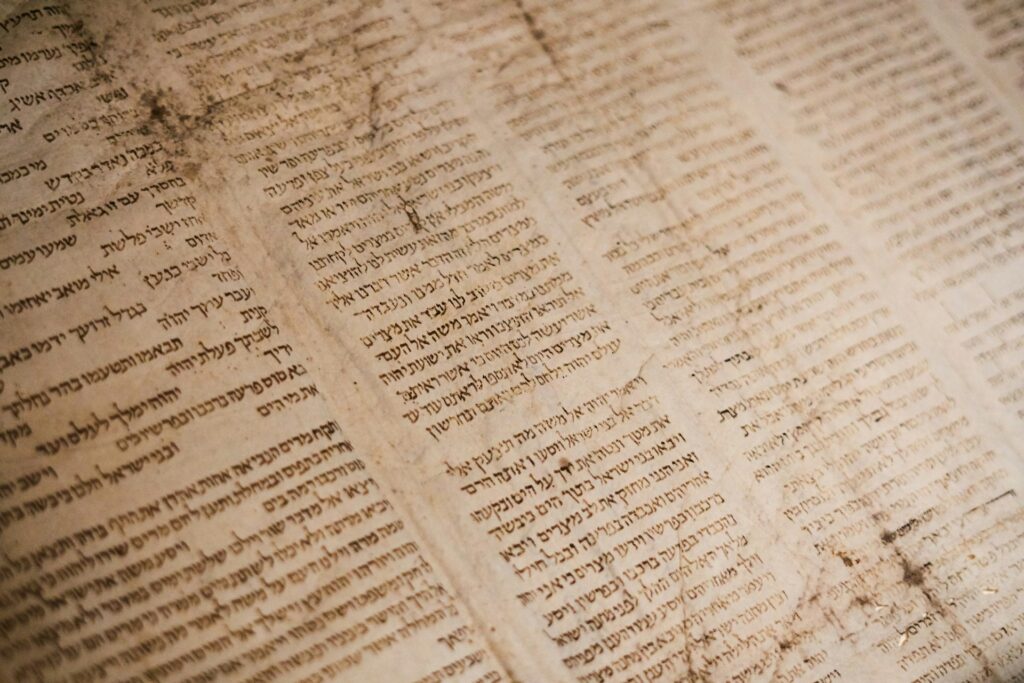
This doesn’t exist with vowels, and really it is not the Hebraic way of thinking outlined in the Bible. You’re supposed to ponder and think on your Torah. Academics want words and vowels, disciples of Jesus (יהושוע) are faithful students that continuously seek.
Even the Greek of the New Testament that does have vowels functions in this way, incredible dual meanings and flexibility within the grammatical structure but with perfect doctrinal precision (as soon as I started reading both Hebrew, then the Greek, it just seemed like no person without the Holy Spirit could have written this).
I’m also not against the Hebrew vowels, we just have to use them carefully, like we do our English translations. I think that’s essentially the way I view them, a diligent translation that might help Hebrew students learn more about the language but not the absolute Word of God.
Joshua’s Other Spellings
So we have tracked down in the Hebrew that Joshua is equal to Jesus. Let’s get back to the names of Joshua (יהושוע).
Nehemiah 8:17
And all the congregation of them that were come again out of the captivity made booths, and sat under the booths:
for since the days of Jeshua the son of Nun unto that day had not the children of Israel done so. And there was very great gladness.
Our King James is translating this “Joshua” differently because the Hebrew is different, but the “son of Nun” here is the fingerprint. This is the same Joshua but the Hebrew here is different. It’s the word “Yeshua”.
And very importantly the third name, is very similar to what I’ve been sharing here, minus one letter the vav:

The interesting thing about this version of Joshua’s name (without the 2nd vav letter) is that it’s shared 100+ times in the 5 of the books of Moses (Genesis through Deuteronomy). Compared to only once for the longer spelling (from Masorite manuscripts) in Deuteronomy 3:21. But it is also in Judges 2:7 (notably with the two different spellings of Joshua both occurring in the same verse).
Even more wild, is that when you review the Dead Sea scrolls (the large group of fragments of scripture, significantly older than the Masorites) that there are two more of the longer spellings of יהושוע in Judges and confirmation on the Deuteronomy 3:21 spelling.
So why don’t we use the most common spelling and just pronounce all the letters? Well, first it’s important to note that because Hebrew words can have their vowels outside of their main alphabet (alefbet). But they can also have those vowels appear as letters. And this happens, just as evidenced here, sometimes in the same verse.
Within all this, I think we’re being given clues as to how to potentially piece together the pronunciation rather than an exact spelling.
Corruptions and Restoration
This is what I can give you, I don’t think it’s the final word but I want to give you at least an output of all this study.
We are seeing “corruptions” occur within our record of the scriptures, I believe this is confirmed by the New Testament here:
John 14:26
But the Comforter, which is the Holy Ghost, whom the Father will send in my name,
he shall teach you all things, and bring all things to your remembrance, whatsoever I have said unto you.
But within these corruptions, we have these little clues, paths we can investigate (by the Holy Spirit). I think it’s likely a larger pattern in our Bibles as we know from archaeology that for example, the ancient Hebrew letters used were not what we know from modern Hebrew presentation but rather pictures with significance.
And I can tell you from my experience learning Hebrew that these original pictographs help a lot in remembering Hebrew words and word families. In the instance of the letters, it is relatively easy to remove the corruption, simply by memorizing a Hebraic action with each modern Hebrew letter.
My Opinion, Putting It All Together
This next section I just can’t tell you is concrete. It’s me speculating as to what the throughline between all this information we have gathered is. I cannot tell you I am certain about this but share this rather to encourage your own studies to see what you can find.
I am not trying to be comprehensive in every detail in this post.
“Yahu” or “Yeho”
- The Masorites seem to have corrupted the vowels for the pronunciation at the beginning of יהושוע, the “yeho” part of our modern pronunciation.
But maybe we can restore this by analyzing the same pattern from the ends of names (many Biblical names ending in “yah” or “yahu”) in Hebrew and potentially from some historical cuneiform writing that has been found about Jehoiakin (with vowels) and other sources.
On one of the tablets, “Ya’u-kīnu, king of the land of Yahudu”
That would be showing directly that the Masorites corrupted the “yeho” structure (or simply preserved the corruption brought forward by tradition) instead of “yahu” as you can see in Jehoiakin’s name with Masorite pronunciation being different from the historical tablet.
That tablet seems to be referring to 2 Kings 25:27-29, wow!
Yahu-shua or Yahu-sha”
- Synthasizing all of Joshua’s names seems to lead to a pronunciation after the “sh” of a “u” sound for “shua”.
What I see in that Nehemiah 8:17 verse is a preservation of this ending “shua” pronunciation and the comparison of the two different spellings from Deuteronomy and Judges lead me to believe that the ending “shua” could be present in both spellings and connecting it with the Nehemiah verse seems compelling (although not definitive).
What Sound Does Shin ש Make?
- The “sh” sound is actually quite interesting as well, as our modern Hebrew “shin” letter seems to have partially combined the “samech” or “s” sound into one letter, (another corruption).
This seems likely due to the way the Hebrew word families work, they often have clear “groupings” that connect with their letter’s signification. The “s” sounds for shin (ש) in Hebrew appear to group with “samech” (ס) instead of shin (ש).
Although I say this knowing it’s very hard to say it concretely, it is my opinion from many examples of Hebrew word family analyses (and this understanding is often reflected in lexicons like Strong’s, Jeff Benner’s work and other sources).
“Sh” becomes “s” in Greek
Whether there was a “sh” sound or not in Hebrew, when it comes to the New Testament Greek that has no “sh” sound it is lost permanently, giving us the “sus” in “Je-sus”.
Losing the Yahushua “a” in Greek
- The ayin last letter is historically pronounced in several different ways by modern day Jewish groups (often silent or guttural in nature), but at the end of the word it simply “carrying” a vowel “a” is the most accepted.
Greek is what is a heavily inflected language, that is the endings of words (and names) carry important grammatical meaning and must have certain ending letters.
Ending a man’s name with an “a” would sound feminine in the New Testament’s Greek, this it appears quite logical that the name for Jesus was transliterated losing the ending “a” for a more typical Greek ending structure (“Yeasoos” will also end in “u” and “n” letters in the Greek New Testament but this is simply the standard Koine Greek grammatical usage).
The ending “u” however in “Yeasoos” (Ἰησοῦς) in my understanding (still quite new to Greek as of mid-2026) does have a strong implication of transliteration as this is not a typical Greek sounding name. Which adds evidence that the Greek-speaking Jews were seeking to preserve pronunciations of certain names and that the pronunciation of Joshua’s name did indeed have the “shua”.
And if you put that all together you would say…
Yahushua.
There’s more we can pull out of even that (is the “h” pronounced or silent), are we certain that the vav vowels really do carry a “u” sound?
And all of this is worth checking in detail, as I’m writing this I see more areas to investigate, but for now this is what I can do. Perhaps you can carry it forward.
Saved by Grace, Through Faith
The search for the name of Jesus (יהושוע) teaches us something fundamental to how our entire Bible operates. Jesus (יהושוע) is asking for your dedication. He gave you this amazing task of reading your Bible, reading this book that literally is the true and living God.
Has every exact and precise detail been perfectly preserved throughout thousands of years? In a way yes, but in a way no. God is above the corruptions that have occurred. He isn’t far away, uninvolved but what I see is God precisely and meticulously preserving the things we need despite our progressive decline, despite our ignorance and our failings.
Somehow, throughout all our shortcomings, Jesus is perfectly evident through our Holy Scriptures, the Bible, the Torah. And you can even search it out and read it in the original languages for yourself significantly easier than at any time in the past 2,000 years, if God wills it.
Going through all this taught me that I can’t always necessarily find the answer I want right away. Jesus (יהושוע) gives us this seeking, a search for our life that separates us from the world.
Ephesians 2:8-9
For by grace are ye saved through faith; and that not of yourselves: it is the gift of God:
Not of works, lest any man should boast.
If you read through till this point, you’re showing by your actions that you care about something many people brush over. May God bless your diligent studies and seeking in Jesus’ (יהושוע) and His name.
What Name Do I Pray In?
As you can see in this website, I have put effort into proclaiming the name of Jesus (יהושוע) in the best way that I know how. My best attempt at the original Hebrew connected with the most recognizable “mark” for our Messiah, the Jewish Savior from the tribe of Judah that the world knows as “Jesus.”
Witnessed by prophecy in Zechariah 6:11-13, the word that comes out at the end of all this analysis.
I don’t know for a certainty what the exact pronunciation is but I know that I care and that I believe it’s important.Should you say a name you’re not certain about? I am wrestling with what to do myself but just remember, we do everything by faith.
Hebrews 11:1
Now faith is the substance of things hoped for, the evidence of things not seen.
Despite all this, I am in no way saying that your Bible is not reliable. You can find God through your Bible, it’s just a more profound path than we thought at first and that the majority of the world and believers are willing to accept. And you need to trust what He says, though we may not have an exact name uniting us now, He hasn’t left us.
Hosea 6:1-2
Come, and let us return unto the LORD: for he hath torn, and he will heal us; he hath smitten, and he will bind us up.
After two days will he revive us: in the third day he will raise us up, and we shall live in his sight.
God is in control, it seems to me that He allowed this confusion so that we would know we need to get back to Him, that we need His Salvation.
However His name is truly spoken, I bless his Great Name, His mark, His “shem” that is our salvation, may He have mercy on us in our ignorance.
Joel 2:32
And it shall come to pass, that whosoever shall call on the name of the LORD shall be delivered:
for in mount Zion and in Jerusalem shall be deliverance, as the LORD hath said, and in the remnant whom the LORD shall call.